The campaign sets out to make known the work of local organisations conserving biodiversity.
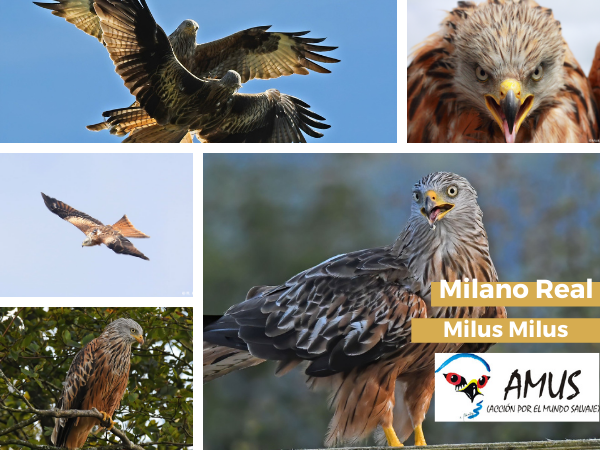
CMI Business School is launching a new campaign to give visibility to the demanding work of organisations committed to the planet’s sustainability, running projects to protect endangered species in Europe. The first species chosen is the red kite (Milvus milvus), a bird all but endemic to the European Union, with minimal or near-extinct populations in Morocco.
For this first instalment we were in touch with Acción por el Mundo Salvaje, AMUS, an organisation dedicated to conserving threatened species, with more than 25 years running a wildlife hospital in the province of Badajoz.
The red kite nests in wooded areas close to open ground such as pasture, scrub or wetland. Its diet is chiefly carrion, including small and medium-sized mammals such as hares, rabbits and field mice. It is a migratory species, and the populations of central Europe winter on the Iberian peninsula.
In Spain the red kite is classified as Endangered, while in the European Union it is listed as Near Threatened. Its European population fell by 30% over 35 years.
The LIFE EUROKITE project
To protect the red kite, AMUS has since 2016 been studying and analysing its situation across the Spanish regions of Aragón, Extremadura and Andalusia, and in other countries such as Portugal. These projects have been developed with public and private bodies alike. Over those years a number of threats have been identified, prompting a series of measures to try to reduce them.
The principal project AMUS runs on this bird is LIFE EUROKITE, whose aim is to identify and quantify the main causes of mortality among several species with threatened status in the European Union.
The information gathered will make it possible to act on the principal human causes of mortality. Poisoning is currently the greatest threat to the species, though electrocution on power infrastructure, collisions with wind turbines and road deaths are also recorded.
LIFE EUROKITE also aims at strengthening the existing populations in Spain. The red kite population in the south-west of the peninsula currently stands at fewer than 50 pairs, and in some areas — such as the border between the provinces of Huelva and Badajoz — the species is close to extinct.
AMUS is therefore arranging the reintroduction of 90 birds from the United Kingdom, where red kite populations are healthy enough to allow a donation of this kind.
Here are their social media channels, so that you can keep up with their projects:
Web: amus.org.es
Facebook: AMUS Oficial
Instagram: @amus_oficial
X: @amus_1
YouTube: AMUS1995