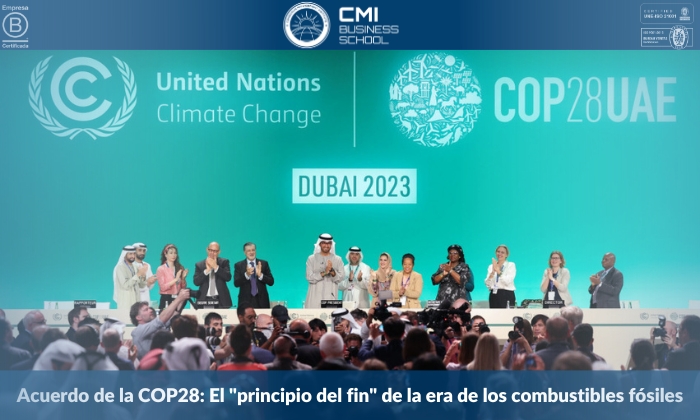
The United Nations Climate Change Conference (COP28) closed with a historic agreement marking what many are calling the “beginning of the end” of the fossil fuel era.
Almost 200 parties gathered in Dubai to address the global climate crisis and to lay the groundwork for a rapid, just and equitable transition to a more sustainable future.
The agreement represents the first “global stocktake”, setting out concrete measures to keep the rise in global temperature below 1.5 °C — the critical threshold for avoiding the catastrophic impacts of climate change.
The decisions taken at COP28 acknowledge that the science requires a 43% reduction in global greenhouse gas emissions by 2030, compared with 2019 levels.
A decision was reached to move towards phasing out inefficient fossil fuel subsidies — a step that finally sets out the international community’s commitment to disengaging gradually from the energy sources that contribute to global warming.
Agreement was also reached on transitioning away from fossil fuels in energy systems, with renewed emphasis on investing in and developing more sustainable sources of energy.
COP28 also gives significant impetus to renewable energy and energy efficiency as fundamental pillars of the transition. The participating countries undertook to triple renewable energy capacity by 2030 and to double the rate of improvement in energy efficiency over the same period.
History may have been made at COP28, but work remains. Putting the agreed measures into practice, and keeping track of the commitments made, will be key to the success of this “beginning of the end” of the fossil fuel era.
“Whilst we didn’t turn the page on the fossil fuel era in Dubai, this outcome is the beginning of the end. Now all governments and businesses need to turn these pledges into real-economy outcomes, without delay,” said Simon Stiell, Executive Secretary of UN Climate Change, in his closing speech.