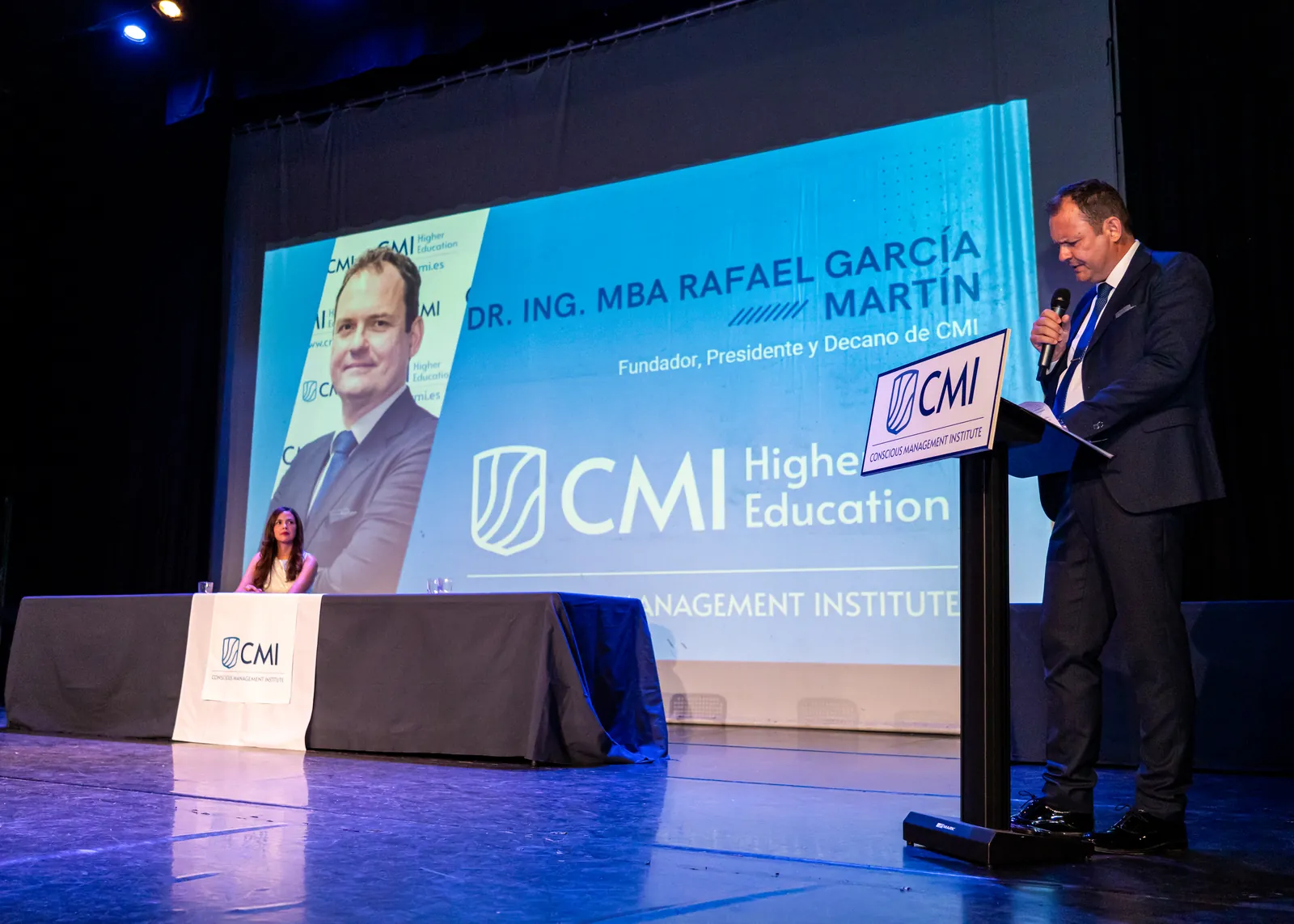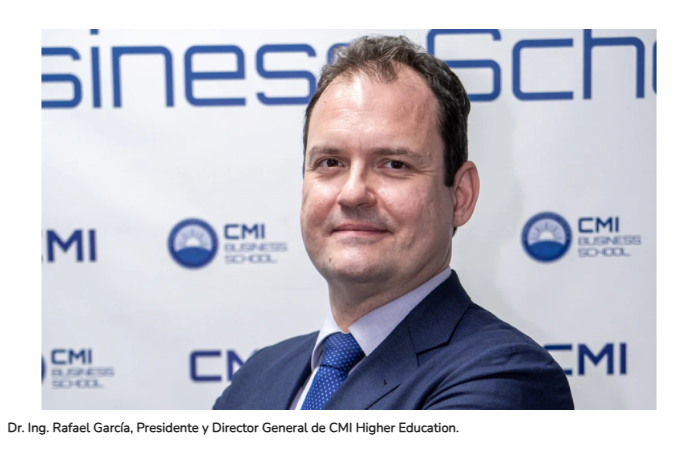
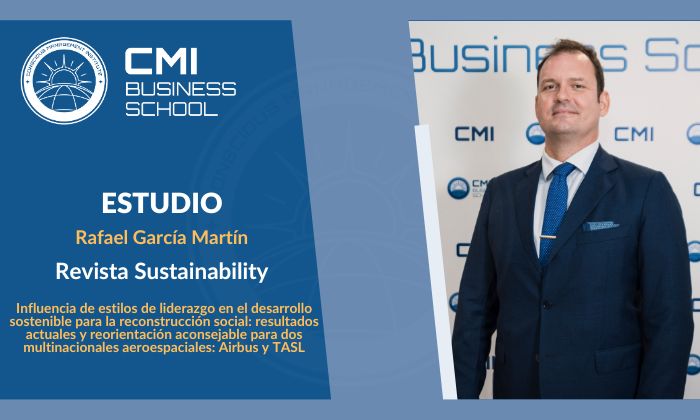
Corporate social responsibility and sustainable development have become imperatives for companies, and the aerospace sector is no exception. A recent study by Rafael García Martín, founder, president and dean of CMI Business School, together with Alfonso Durán Heras and Karen Reina Sánchez, examines how different leadership styles bear on meeting sustainability goals and on social reconstruction, taking the cases of Airbus and Tata Advanced Systems Ltd. (TASL).
Titled “Influence of leadership styles on sustainable development for social reconstruction: current outcomes and advisable reorientation for two aerospace multinationals — Airbus and TASL”, the study was published in a special issue on “A new perspective of leadership in civil society and social reconstruction” of the journal Sustainability. It uses an inductive methodology based on two transnational case studies and a comparative analysis supported by statistical testing.
Data was gathered through interviews and surveys with key leaders at both companies, focusing on three leadership styles: transactional, transformational and servant leadership.
In analysing the current position, the results indicate that all three leadership styles are present at both companies, but that servant leadership — centred on responsibility towards others — and transformational leadership, which seeks to inspire and motivate employees towards shared goals, stand out as more effective for sustainable development and social reconstruction.
The finding underlines how much a leadership oriented towards vision and towards service to others matters, given today’s environmental and social complexities.
As for how the two companies might reorient themselves in future, the study proposes a hybrid model of leadership that is fundamentally servant-based while incorporating elements of transformational and transactional leadership, allowing a gradual shift towards a servant approach more firmly centred on values and sustainability.
In the authors’ words — Rafael García Martín, Alfonso Durán Heras and Karen Reina Sánchez — “our study seeks to fill the current gap in understanding how leadership styles influence the economic, social and environmental outcomes of the aerospace and defence industry. By highlighting the effectiveness of servant and transformational leadership, we hope to provide valuable guidance for other companies in this sector and in similar ones”.
The full study can be read here.