Rafael García Martín, President and Dean of CMI Business School
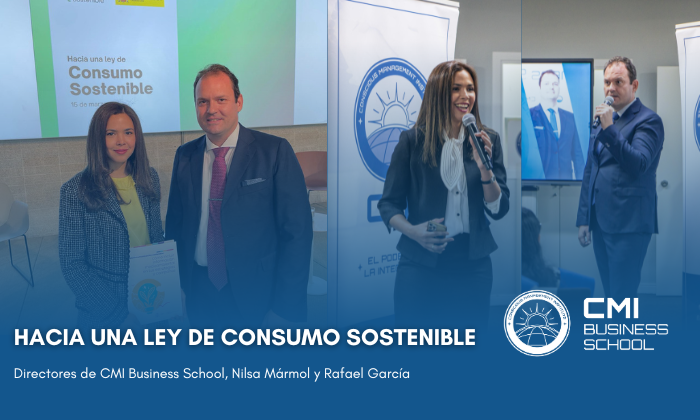
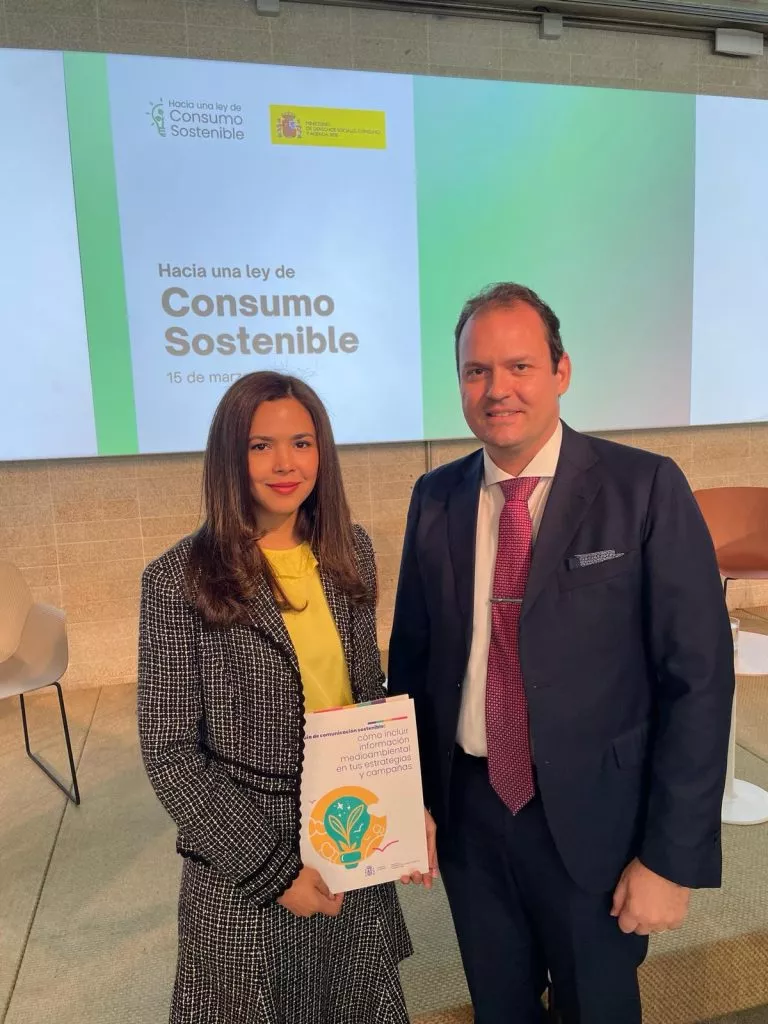
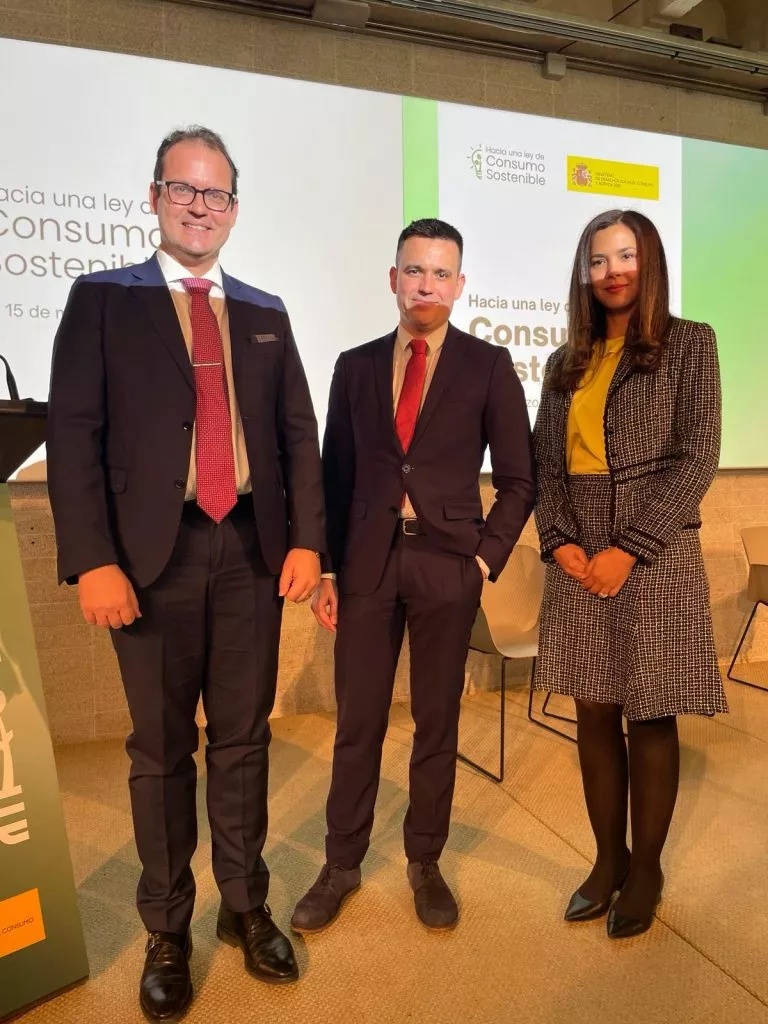
Madrid (Friday 22 March) — On 15 March 2024, marking World Consumer Rights Day, CMI’s directors Nilsa Mármol and Rafael García attended the presentation in Madrid, by Bibiana Medialdea, Secretary-General for Consumer Affairs and Gambling, and a panel of experts, of the draft sustainable consumption law.
As Medialdea explained in her remarks, public policy should serve to let people make the best individual decisions. The seriousness of the eco-social crisis is understood: nine in ten Europeans regard climate change as a serious problem, and two thirds think governments are not doing enough to solve it. Companies must therefore change their strategies and how they communicate about it.
From 15 March 2024 a public consultation on the new sustainable consumption law opens, to gather detail and fresh contributions. The law will make substantial advances on repairability: wherever possible, repair should be encouraged and preferred over replacement. A repairability index is proposed, bringing together indicators for repairing a product (how easily parts can be obtained, how easily it can be assembled and dismantled, and so on).
Some 85% of Europeans would like more information about durability, which could mean tripling sales of durable products. Another element being brought in concerns eco-design and production: strengthening the requirements on companies so that products last longer and are easier to repair. There will also be a fight against greenwashing.
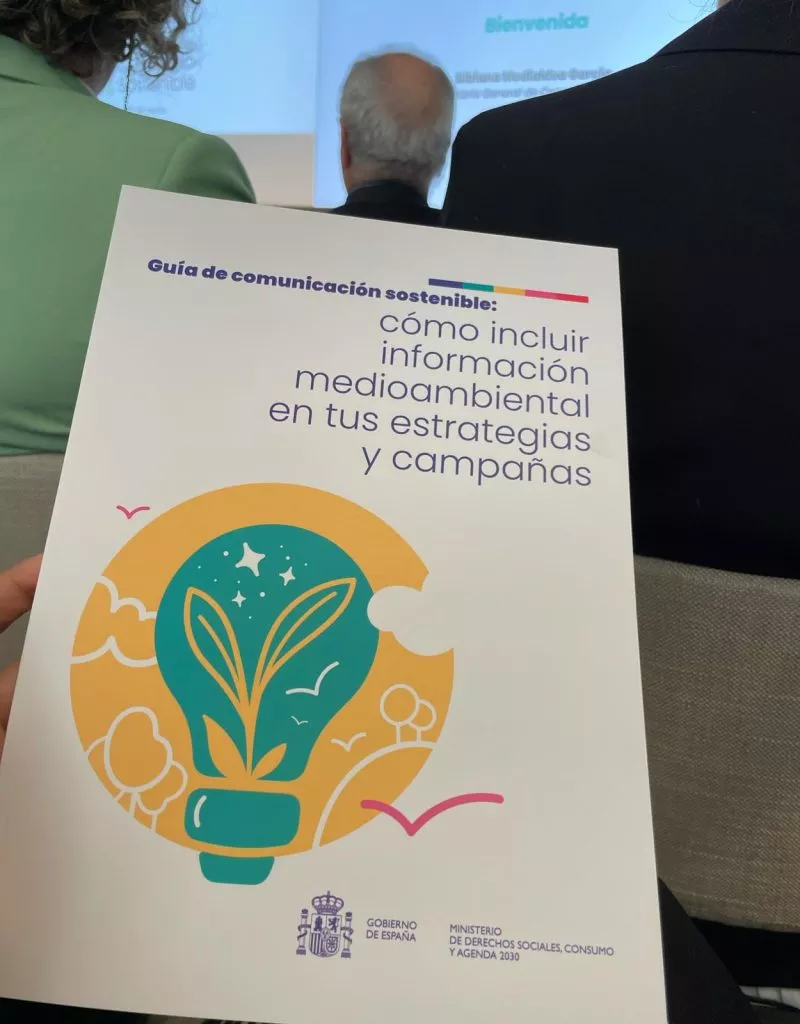
To that end a guide to sustainable communication is being circulated. There is deliberate misinformation from companies seeking to channel environmental awareness, which causes harm because people are deceived and take decisions on false information. It also creates unfair competition against companies that do invest in sustainability, and has a negative effect on society and the planet, since it discredits sustainable solutions and discourages the efforts sustainability requires.
For 56% of EU consumers in 2023, environmental impact affects the decision to buy. Some 80% of products in the EU carry environmental claims, but most are misleading: only 35% are explicit in the logo or labelling and can be verified. The new law will require claims to be sufficiently substantiated; otherwise such practices will be liable to sanction.
The Directorate-General for Consumer Affairs has produced the Guide to Sustainable Communication, given how serious and urgent the problem of greenwashing is, and because companies are central to solving it.
At the round table, Professor Alba Nogueira, Chair of Administrative Law at the University of Santiago de Compostela, stressed that this law is essential to having a regulatory framework that strikes a balance: one that can encourage companies while protecting consumers through sanctionable measures.
Professor Nogueira noted that a consumer is at a disadvantage against large corporations, so it matters that the administration has the means to support consumers and prevent bad practice. Green marketing is produced by the common-sense demand of consumers who consider this aspect important when buying.
Consumer law has evolved from freedom of supply and the choice of the best price towards taking account of the climate crisis in regulation, and setting out explicitly the criteria for prohibited practices and new factors such as repairability and the avoidance of planned obsolescence.
Aurelio del Pino, a member of the Competitiveness, Trade and Consumer Affairs Committee at Spain’s employers’ confederation CEOE, said of Spanish business that in a competitive environment the consumer holds considerable power, so companies display their best attributes in order to sell. He noted in particular that commitment to sustainability is long-standing in Spain, with companies well ahead of legislation — even 20 years ago, according to published CSR reports.
For del Pino, the environmental element is fundamental, since consumers decide on those criteria, which makes fair competition essential. What is needed is legal certainty and legislation that is simple, minimal, readily applicable and harmonised across Europe, taking account of company self-regulation — which means having the flexibility to bring further elements into sustainable development.
Paz Serra Portilla, head of projects and campaigns at the Spanish consumers’ federation CECU, said the climate crisis is an enormous concern given the data that keeps emerging — this winter, for example, was the warmest on record. CECU holds that consumers should not be burdened with the work of verifying the information and claims made about products.
In its report on greenwashing in supermarkets, CECU found both a lack of transparency and low-impact sustainability claims — speaking only about the last link in the supply chain, for instance. It therefore calls for greater transparency and for the full environmental impact of the products sold to be taken into account, taking a lead on the matter internationally whatever the state of European legislation.
The regulatory framework should be put in place as soon as possible to protect consumers’ rights. Among the priorities is moving from neutrality to reducing greenhouse gas emissions, and taking the measures that requires — extending repairability within the guarantee period and widening it to sectors such as textiles.
Daniel Arribas González, Director-General for Consumer Affairs, set out the challenges we face: securing guarantees in consumption and ensuring they are honoured. Greenwashing is already prohibited today; the problem lies in the administration’s capacity to act, given the lack of a clear framework in the face of ambiguous claims.
Companies need to be encouraged to want to act properly. The sustainable consumption law aims to bring together, in harmonised form, the various pieces of legislation approved or under way in the European Union — the directive on empowering consumers, and others on improvements to durability, repairability, ecological footprint, green claims, eco-design, packaging and more. Current rules allow fines of 100,000 euros and of between four and six times the profit obtained by those who breach them.
The participation phase opened on the same day, 15 March, for drawing up the new bill. We hope this process and those that follow prove successful, so that the law helps legislate for the fundamental things needed to make sustainable consumption transparent and workable in the Spain of our time.