“Growth and progress are sharper where authentic, values-based leadership steers the organisation towards positive impact”
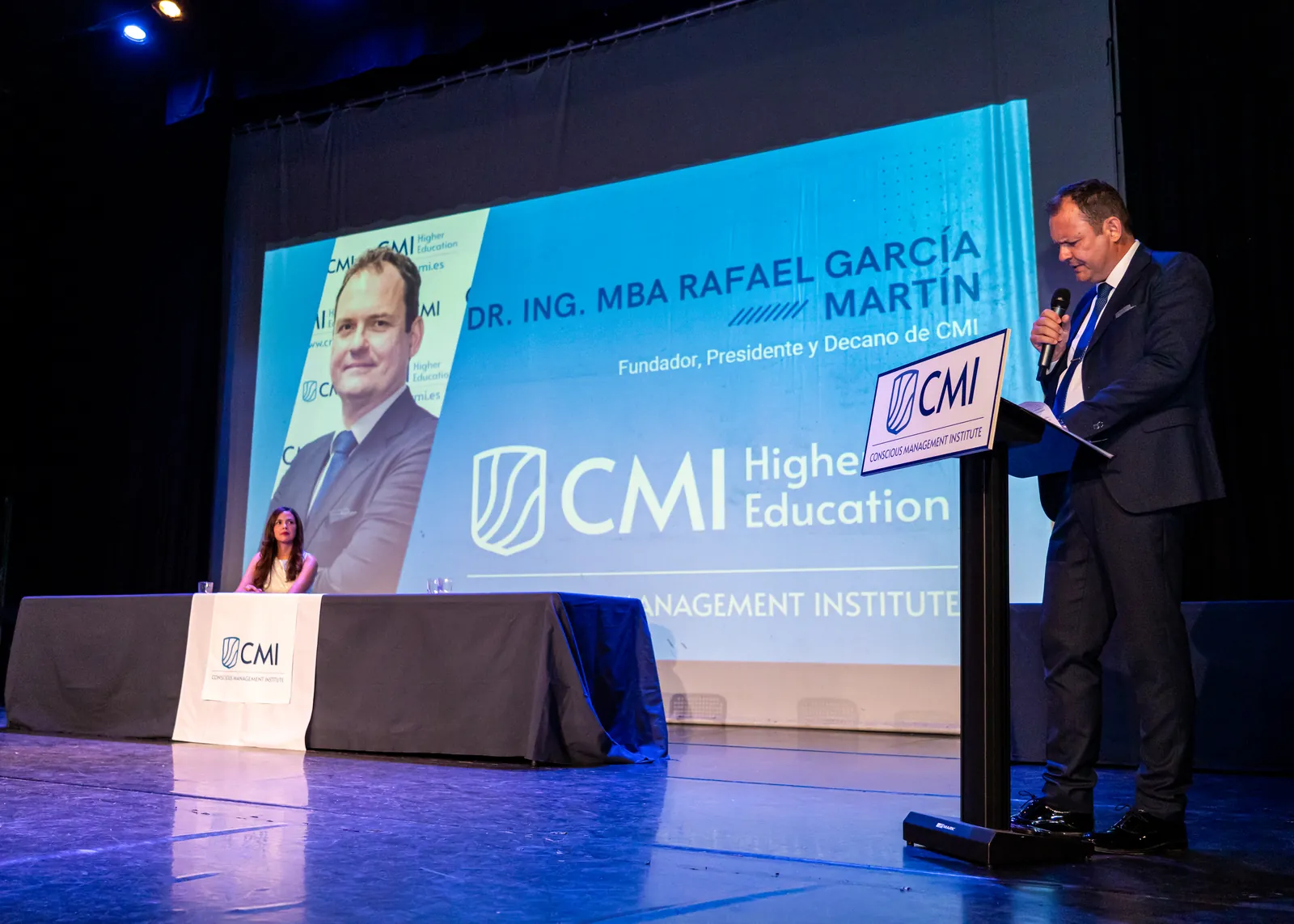
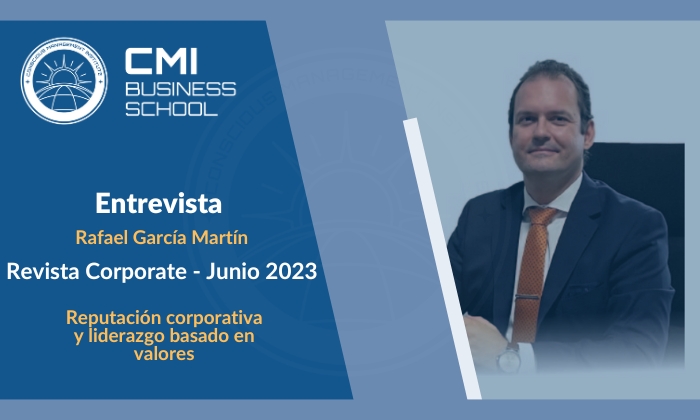
Revista Corporate interviewed Rafael García Martín, president and founder of CMI Business School, for its June 2023 issue, exploring his outlook and his experience in the management of corporate reputation, good governance, and how corporate social responsibility (CSR) and sustainable development have evolved in recent years.
He also set out how these have radically changed the way companies face the challenges of the moment, and addressed the importance of leadership grounded in genuine values in generating a positive impact on society and on the environment.
Through his reflections, the interview offers a thorough and perceptive account of how CMI Business School has built CSR and sustainable development into its business education, preparing students to lead in a business world that grows more conscious, and more demanding, by the year.
Background
Reputation and good corporate governance in the twenty-first century have undergone a significant transformation, one in which CSR and sustainable development play a central part. Companies large and small have come to recognise the importance of a holistic approach that writes sustainable practice into the company’s DNA.
Running a business is no longer simply a matter of value for money. Today, sustainability plays a crucial part in a company’s reputation and in its performance.
Corporate social responsibility in a company’s DNA
It is worth noting that this approach is not confined to large corporations: small and medium-sized enterprises equally recognise the importance of reputation and governance management as an integral part of their success.
“It is essential to work on triple-benefit strategies at leadership level: environmental, social and governance,” says García Martín.
Governance takes on particular importance here, since communication that is authentic and genuinely committed to CSR and sustainable development is essential if a company is not to be seen as merely engaging in “greenwashing” or “bluewashing”. Working on triple-benefit strategies that further sustainable development has therefore become fundamental to success and to maintaining a solid corporate reputation, in smaller companies as much as anywhere else.
“The rules of the game are constantly changing: the environment, society, the regulatory framework, customer expectations, and more,” the president and founder of CMI Business School emphasised.
CMI Business School: a commitment to CSR
Fully aware of the importance of CSR and sustainable development in today’s business landscape, CMI Business School has built that perspective into the core of its business education.
From young “junior” students to experienced professionals looking to sharpen their practice, the institution offers practical and executive master’s programmes covering management techniques aimed at maximising positive impact and reducing risk.
“With a faculty made up of successful professionals, most of them holding doctorates, all the cutting-edge knowledge that companies and organisations need today, locally and globally, is applied with scientific rigour.”
At CMI, teaching is tailored to each student’s individual needs, equipping them to take on responsible leadership in a business world that grows more demanding all the time.
You can read the full interview (in Spanish) here.