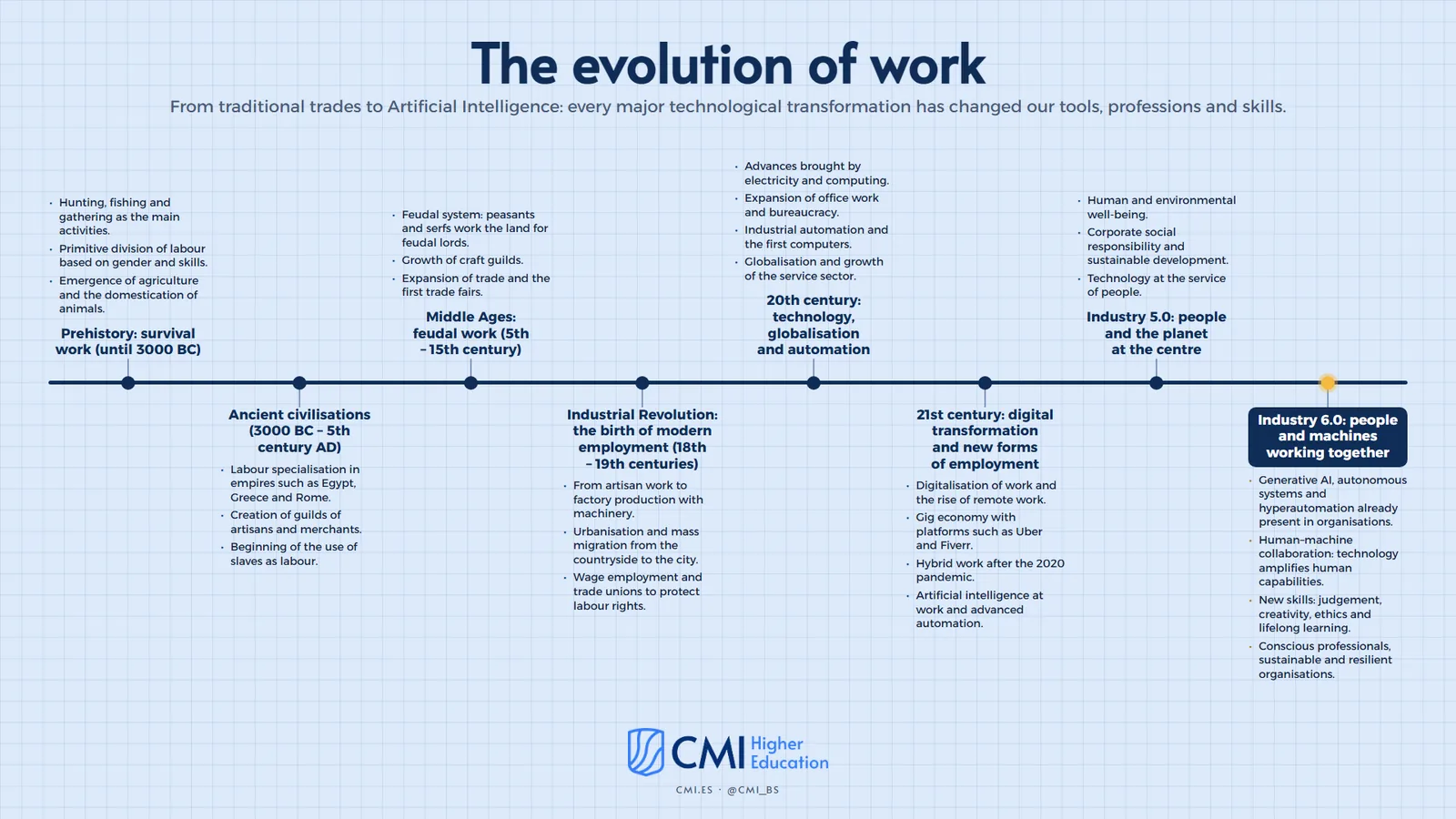
Social responsibility, understood as a strategy for positive impact, has to rest on a working model of people management run from the human resources function. More than a statement of intent, that means developing policies which improve the quality of working life and create healthy environments — because people are a company’s principal asset.
We cannot categorise institutions as socially responsible if they do not first generate a positive impact on people from the inside, and only then project that principle outwards into society. When the people who work for a company are satisfied in their jobs, feel they are paid appropriately, feel valued and looked after, have their views listened to and can count on a support system, the likelihood that they will take on the company’s objectives and be more productive is far higher.
The atmosphere at work, whether positive or negative, always finds its way outwards in the end — to clients, to suppliers and to the public at large — and that should serve as a signal to business leaders. The culture an organisation builds, made up principally of the ethical values within corporate social responsibility, together with its policies and its practices, must be coherent; and it is that coherence which determines whether a company is socially responsible.
The role of senior managers, alongside the efforts of the human resources department, needs to be led by people capable of making commitments, of driving change, of offering support and of facing challenges transparently and fairly. Values return to the centre of the conversation, because the worldview of those at the top shapes the values of the organisation.
Employees themselves also play a fundamental part in creating a healthy organisational climate. They need to know the institution’s philosophy, and they must be shown clear corporate policies that guide them in carrying out their work properly. One practical way to understand how employees perceive the company is for the human resources function to run objective surveys measuring the working climate.
Whoever leads the human resources department must in turn foster an atmosphere of respect and trust, through effective communication and a close working relationship with people. Flexible organisations — those that allow professional and personal life to be reconciled, and that support the development of both professional and personal resources — are the ones professionals are looking for today.
We manage people, not resources: people in the fullest sense, which goes well beyond their professional and working role. People who invest themselves emotionally in their work feel fulfilled and transmit energy, and the effect on everyone around them is markedly positive. But for people to reach that point, organisations must commit: they must make sure their colleagues feel recognised for what they contribute, that they develop autonomy, and that they have open spaces in which to take part.
This article arose from an interview by Laura Minyetty, a student on the Master in Responsible Marketing and International Trade Management at CMI, with Natalia Di Piazza Umbides, Head of Human Resources at CMI Higher Education.