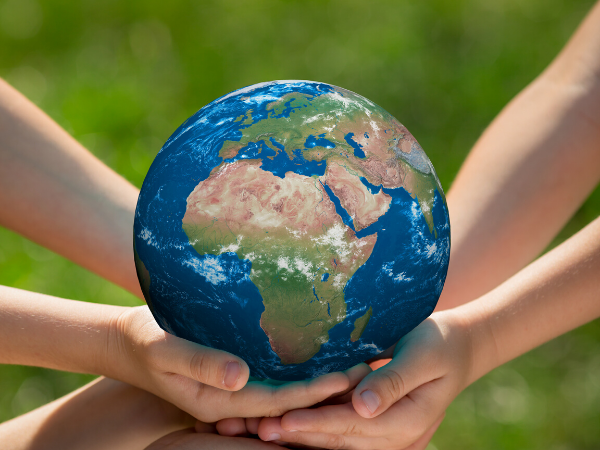
International days are an opportunity to address important subjects and build public awareness of them. The better we as citizens understand our planet’s unresolved problems, the more we can demand that our representatives act — and so have an impact.
International Mother Earth Day was marked on 22 April, an official date proclaimed by the United Nations in 2009, though it had been celebrated since 1970.
In a note marking the occasion, the United Nations set out why it matters to remember the day and to give no quarter in the fight against climate change. The document noted:
- “A new infectious disease emerges in humans every four months. Seventy-five per cent of these emerging infectious diseases come from animals.”
- “Healthy ecosystems help protect us from disease, because a diversity of species makes it harder for pathogens to spread.”
- “Around one million animal and plant species are at risk of extinction.”
- “Fighting climate change and the loss of biodiversity helps not only nature but human health.”
Why corporate social responsibility matters
According to the United Nations Environment Programme’s 2019 Emissions Gap Report, global carbon emissions need to fall by 7.6% by the end of this year, and to keep falling by the same proportion every year over the coming decade, if global warming is to be held below 1.5 °C by the end of the century.
“The COVID-19 pandemic is a clear reminder of how vulnerable humans and the planet are to threats on a global scale. Uncontrolled damage to our environment must be addressed,” the organisation’s statement notes.
At CMI Business School we therefore run programmes grounded in corporate social responsibility, so as to encourage practice that is responsible towards people and towards the environment. We also support all our students’ research and work aimed at generating positive impact, and argue every day for greater recognition of how much CSR matters in business practice.
In the same spirit, and to help combat climate change, we donated 325 saplings of strawberry tree and stone pine at an event — species native to the Iberian peninsula — to help absorb CO₂.