In this special CMI report, an expert reflects on the effects the COVID-19 pandemic had on the environment. Which good practices adopted during lockdown produced positive results, and which can we keep? Did the falls in pollution levels hold, or have we lost them now that the economic and productive system has started up again? Read on to find out.
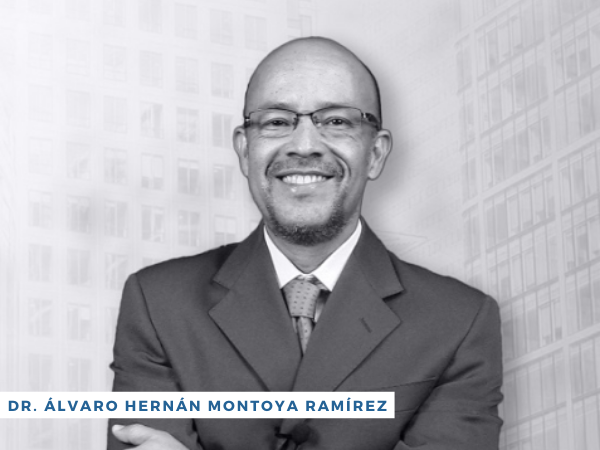
Álvaro Hernán Montoya Ramírez holds a PhD in Environmental Sciences and specialises in international cooperation and sustainable development; corporate environmental management and CSR; and water, environment and climate change. He works as a consultant, as an adviser in public administration and international development cooperation, and as a lecturer and researcher.
He is responsible for the module “Environmental management and protection” on the innovative Master’s in CSR and Sustainability at CMI Higher Education.
What follows sets out concrete figures on the negative and positive impacts of the practices adopted in the wake of the pandemic that changed the world’s rhythm — and is changing it still.
- The COVID-19 pandemic has hit health, economic and social systems hard. But what would you say about its impact on the environment?
Before anything else, it is worth saying that with a subject as current as this, any opinion is being offered almost in real time, with the enormous margin of intuition — and even speculation — that entails.
COVID-19 has given rise to intense research, principally in the health sciences but in other disciplines too, given the many complex implications the pandemic has for society and the economy, with numerous cultural, political and commercial ramifications.
Even so, a reasonable amount of time will be needed — perhaps once the situation is felt to have been reasonably overcome — for that vast volume of new knowledge to settle, so that conclusive judgements can be made and useful lessons drawn. The reflections shared below therefore reflect only my own particular view of the local and global picture up to this point.
That said, and putting on record how approximate and preliminary my assessments are, let me turn to some studies in ecological science that raise the possibility that COVID-19 — the illness caused by the SARS-CoV-2 coronavirus — was a zooanthroponosis: that is, a disease transmitted from an animal (in all likelihood a vertebrate) to people1.
The root of such transmission would lie in human beings altering or breaking the balance of certain ecosystems, such as tropical forests (through deforestation and the trade in animals), which are capable of containing and regulating such pathogens within them. Indeed, if we cast our minds back, this would not be the first pandemic caused by that mechanism: Ebola or HIV/AIDS might be other catastrophic examples.
So it cannot be ruled out that something similar might happen again, in the near or distant future. That is as regards the probable cause of the disease, intimately bound up with the environment. In parallel, hypotheses circulate describing SARS-CoV-2 as some sort of laboratory creation, but in the absence of clear scientific consensus I shall not address them. And above all, I prefer to keep faith in the goodness of human nature.
As regards controlling the spread of COVID-19, the health authorities keep pressing three key measures on us: wearing a mask, keeping a safe distance from others, and hand hygiene. On that third point we run once again into one of the great historical challenges of human development: safe access to drinking water and basic sanitation.
We should remember that, according to the UN, and despite the undeniable progress made this century (much of it achieved under the Millennium Development Goals between 2000 and 2015), more than 2 billion people in the world today still lack adequate water services, and more than 4.2 billion have no sanitation2.
There can be no doubt, then, that this factor, with its obvious environmental dimension, plays a crucial part in managing the current social and health crisis. It makes itself felt in all its severity in disadvantaged contexts such as developing countries, increasing the intensity and the incidence of the multidimensional problem of poverty. It is no surprise, therefore, that within the 2030 Agenda the sixth Sustainable Development Goal affirms the global commitment on this front, with a human rights-based approach as the necessary ethical and political reference point.
- The environment, from the local scale to the global, has seen apparent positive and negative impacts from the pandemic. What would some of them be?
Speaking of the pandemic’s effects on the environment, there have been both positive and negative ones. The first thing that comes to mind is surely the marked fall in air pollution, which followed the severe and prolonged lockdown — practically worldwide — that brought all social and economic activity to a halt. That “detoxification” was apparent not only in the air but in other natural resources such as water: we witnessed astonishing sights, among them the crystal-clear canals of Venice, usually cloudy from the constant, intensive traffic of tourists. We also saw animals taking over human-shaped environments around the world3.
So, for a very brief spell, before our astonished eyes and to a degree not seen in recent memory, the planet’s prodigious and rapid capacity for ecological recovery became more than plain.
The other side of the coin showed itself afterwards — and persists. To begin with, the restart of production has taken us back to the previous scenario of environmental degradation, so that any progress that arrived with lockdown (rather than being sought) was cancelled out in very short order.
Then there is the sudden appearance of new waste streams, some of them potentially hazardous, such as face masks, which have become an indispensable part of our daily dress.
Other waste streams, this time ordinary plastic ones whose generation has also shot up with the coronavirus crisis, are the packaging of hygiene and cleaning products, along with the disposable gloves handed out in shops.
In tackling these emerging environmental problems within our urban and rural communities, it would do no harm to insist — more than on the importance — on the urgency of sustainable waste management.
A chapter of its own is demanded by the reverse suffered in the arduous, slow change of paradigm on mobility which some societies, Spain’s included, had been achieving in recent years: a shift towards favouring collective public transport over individual private transport, always with a view to cutting the per capita carbon footprint. Understandable fear of infection has pushed many people back into the private car, to avoid crowding on mass transport systems. Some compensation for this might perhaps be seen in the new impetus the bicycle has gained as an alternative to public transport.
- Was there really a reduction in pollution during lockdown?
Of course there was, and reports of it abound online. What strikes me most forcefully is the sharp decline in air pollution — in terms, say, of concentrations of carbon dioxide (CO2), a greenhouse gas, or of nitrogen dioxide (NO2), a pollutant associated with traffic — once household confinement was imposed and, with it, the closure of the economy. So it was recorded in 2020 by, to cite just a couple of examples, the climate action site CarbonBrief for China in February4, and the European Space Agency for Italy in March5.
In the Spanish context, by way of example, we have an interesting report from the Madrid City Council Air Quality Service on how air pollution behaved in the city during the state of alarm, covering January to June 20206. It confirmed a marked fall in concentrations of the substances most directly associated with motor traffic, such as nitrogen dioxide — though not so much in other compounds such as ozone or particulate matter.
Unfortunately, though not surprisingly, with the return to old habits — or rather to old journeys — the city has once again settled at its “normal”, pre-lockdown levels of air pollution. Indeed, at the very time these lines are being written, Madrid has again activated its high-pollution protocol, with immediate consequences for road traffic7.
Also on the subject of air, and following from the restrictions on movement and activity in the particular Spanish context, evidence has been gathered on the fall in noise pollution: at the beginning of April, the citizen movement Smart Citizen reported a significant drop in ambient noise levels in Barcelona. Around the same time, the Laboratory of Applied Bioacoustics at the Polytechnic University of Catalonia noted a marked reduction in underwater noise, thanks to the suspension of shipping — which may have benefited the well-being of cetaceans, which communicate through sound8. In all likelihood we have already returned to the noisy scene that went before.
- As an expert, and as the lecturer responsible for the module “Environmental management and protection”, which CSR good practices do you think companies put in place successfully after the global lockdown?
Well, in the first place, there is remote working — a long-standing trade union demand grounded in the call for working conditions that allow professional and family life to be reconciled, and which would have the side effect of cutting the per capita carbon footprint we spoke about, thanks to the routine motorised journeys saved.
The pandemic seems to have given this trend a decisive push, particularly during strict lockdown — but not only then. Today, with the health emergency still in force and the picture still far from clear, numerous companies continue to use that formula, overcoming even their initial reluctance. All in all, it makes ever more sense to think that in the longed-for “post-Covid” context, remote working will be much more present in organisational life than it was before the coronavirus — and with it, its associated environmental benefits.
A separate matter is the need to ensure remote working is used healthily and rationally, so as to avoid the real risk of a company “abducting” an employee’s personal space and time, which would be counterproductive for the better working environment CSR advocates. It will therefore take the joint efforts of employers and workers to prevent or correct deviations of that kind. It was with that in mind, during the first state of alarm and its consequent boost to remote working, that social, political and media debate about the right to digital disconnection was revived9.
Besides remote working, another CSR initiative — not necessarily a new one — that might emerge revitalised from the pandemic, given the changes seen in transport habits, would be everything companies do in favour of sustainable mobility for their employees. That includes promoting car sharing, for instance, or providing parking for bicycles and scooters.
As regards the emergence of new solid waste streams mentioned above, it would be reasonable to hope that those organisations which, as part of their CSR, already have an environmental management system in place under a reference standard (ISO 14001 or EMAS) choose to adjust their environmental programmes, so as to update their internal waste management procedures, given how adaptable such protocols are.
Going beyond the merely environmental sphere — though I am not sure whether this is wishful thinking — I would like to believe that this emergency has revived solidarity and empathy across much of society, precisely because the problem is a universal one. If so, one might expect a better attitude among employees and managers towards, for example, the corporate volunteering CSR might see fit to propose. A new window of opportunity would open here for channelling that potential for service to the community and for care of the natural world.
In any case — and I close my reflection with this — I would like to underline that the extensive, complex web of interactions and synergies of every kind that has emerged around the current global COVID-19 crisis will only be appreciable and interpretable in all its scale and intensity later on, from a greater distance in time. Right now we are still in the eye of the storm.
Interview by Estefanía Villasanti, communications coordinator at CMI.
Sources
- eltiempo.com (accessed 18 January 2021).
- un.org (accessed 18 January 2021).
- elperiodico.com (accessed 22 January 2021).
- lavanguardia.com (accessed 18 January 2021).
- lavanguardia.com (accessed 18 January 2021).
- mambiente.munimadrid.es (accessed 19 January 2021).
- msn.com (accessed 19 January 2021).
- elperiodico.com (accessed 19 January 2021).
- cincodias.elpais.com (accessed 20 January 2021).