The growth of hybrid business forms is beginning to trace an exponential trend. The search for greater harmony between the market, better practice and broadly shared wellbeing brings ever more sharply into focus what that hybridisation itself contributes to the ways we trade and generate returns, while creating impact at the same time.
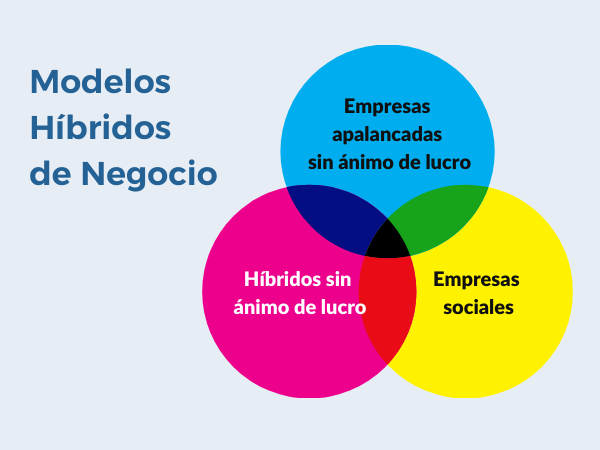
Of the many studies one might explore, it is worth pausing on one of the best known: Elkington & Hartigan (2008)[1]. It sets out, forcefully and rigorously, just how wide the range of possibilities becomes when creativity and entrepreneurial drive are involved. The article proposes essentially three classifications for the business models now emerging in the field of social innovation:
– Leveraged non-profit
– Hybrid non-profit
– Social business
Following that order, the philanthropic character is at its most pronounced in the first and is progressively transformed through the others, reaching a purely commercial objective in the third — though every model retains the aim of producing positive social impact. The three distinctions naturally overlap, combining elements from both the philanthropic and the business worlds, along with the transformations that come from learning, from networks and from information that is increasingly available globally. This emerging phenomenon of social entrepreneurs creating and capturing value in markets and opportunities that others would not, at first glance, have considered profitable opens up a new landscape — one that necessarily calls for fresh thinking about the various ways such work can be financed.
Knowing what options exist internationally can be a comparative and competitive advantage for entrepreneurs of this kind. One such option is the fiscal sponsor arrangement for impact projects in the North American market. Organisations such as ETHOSYA make it available. It is for this reason that we are beginning to collaborate with institutions in Spain such as CMI, to create training courses in the field and to build the synergies needed to strengthen the financing of triple bottom line projects. Combining training, advice and the incubation of new initiatives — drawing on funding from sources that are novel and little explored in the Spanish market — will, we believe, give renewed impetus to early-stage entrepreneurs who need support in delivering ambitious objectives with educational, economic and ecosystem benefits.
[1] Elkington & Hartigan (2008), “Creating Successful Business Models: Lessons from Social Entrepreneurship”, chapter one in The Power of Unreasonable People: How Social Entrepreneurs Create Markets That Change the World. Boston, MA: Harvard Business Press, 2008.
Verónica Medaura, PhD in Economics and Business Management, co-founder and CEO of ETHOSYA.org and lecturer at CMI Higher Education.