
If you are among those who agree — or disagree — that corporate social responsibility is simply volunteering or philanthropy, then read this article and draw your own conclusions.
The everyday versions of CSR
Those of us who work in and argue for corporate social responsibility (CSR) are used to hearing three main versions of what people take corporate social responsibility to mean:
- Social volunteering or philanthropy.
- Giving money to good causes.
- Unnecessary regulation and more red tape.
Let me be clear: what I have just listed is all well and good. Volunteering and donations are a wonderful way of contributing to a better world. I have deep respect for all these practices, and I support them.
As for regulation — well, it exists, and although some find it a headache, for others it is a relief to think that companies are obliged to do something more for society.
What I want to reflect on in this article, though, is that corporate social responsibility goes beyond all this, and that putting it in place in companies is both possible and absolutely necessary. Society, the planet and companies’ own profitability demand it.
What corporate social responsibility actually is
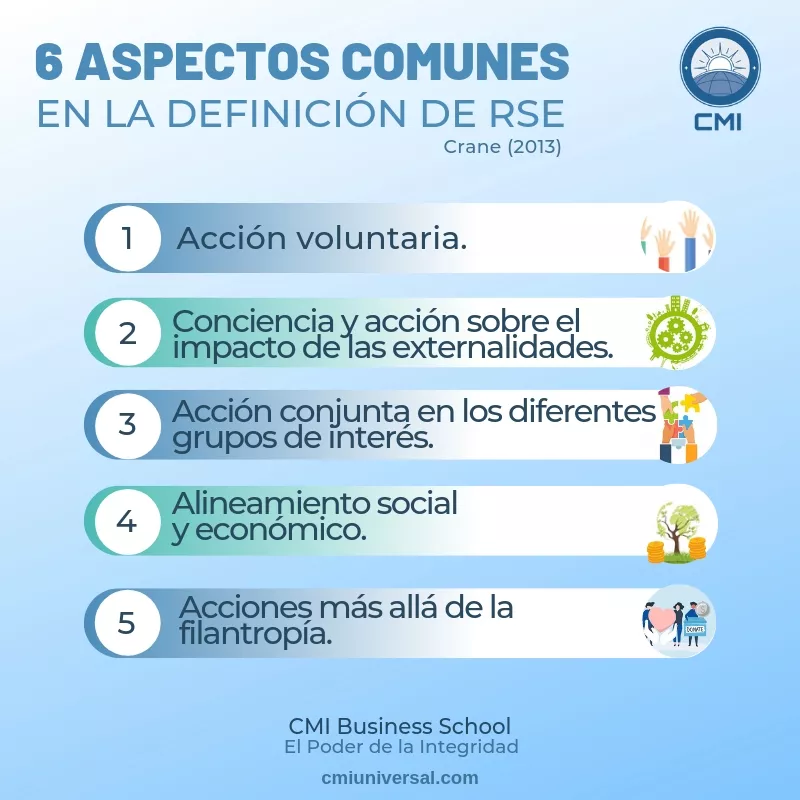
In 2013 a group of authors led by Crane set out to research the various definitions of corporate social responsibility and found that all of them agree on five aspects:
- Voluntary action.
- Awareness of, and action on, the impact of externalities.
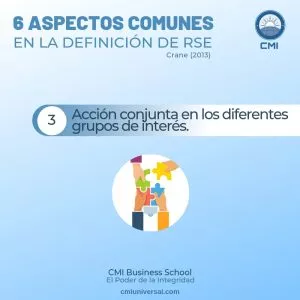
- Joint action across the different stakeholder groups.
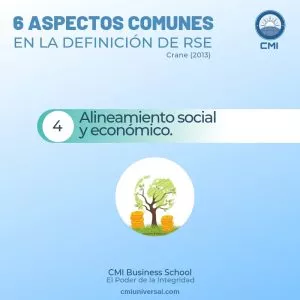
- Social and economic alignment.
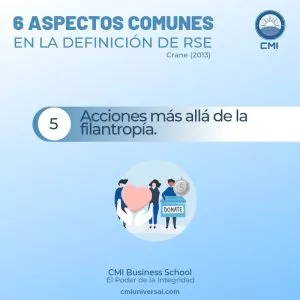
- Action that goes beyond philanthropy.
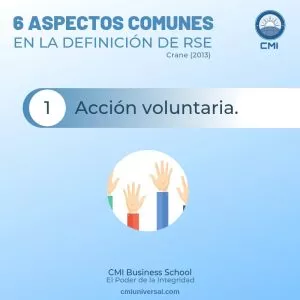
Voluntary action
On this, society as a whole agrees. But if you stop at this version alone, you limit the impact corporate social responsibility can have environmentally, socially and economically.
A very positive voluntary action by a tourism company might be, for instance, to clean the beaches once a month. But how much better would it be, for the company and for its stakeholders — tourists, local entrepreneurs and businesses, residents, suppliers and the rest — if it launched a campaign to raise awareness of the dangers pollution poses to marine species, and a permanent beach recycling scheme besides, and, not content with that, put the recycled material to work for the community, involving the leading company’s own employees, local businesses and entrepreneurs, the town council and residents?
Can you see how the simple volunteering view falls short?
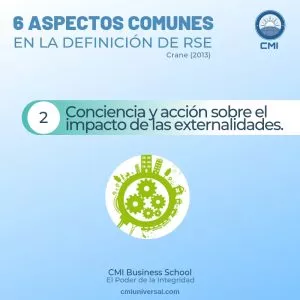
Awareness of, and action on, the impact of externalities
Beyond complying with the law, this is about being aware of the extent to which the company’s activities have an impact on the environment, on the communities around the business and on its stakeholders.
To stay with our imaginary tourism company: let us suppose the board decided to stop discharging its waste into the sea. That is why it began the awareness and clean-up campaign. What we are seeing there is awareness of a negative impact, and its conversion into positive ones.
Joint action across the different stakeholder groups
This is not only about taking those involved into account, but about making them part of the activities, solutions and actions taken for the good of all. In other words, creating a win-win relationship.
How can you achieve the best possible impact for everyone if you do not bring in the people involved?
Social and economic alignment
This goes hand in hand with the previous point, here with social benefits in mind, without detriment to the economic returns of companies and their shareholders. Certainly, for a company to begin the transformation towards corporate social responsibility, an investment is needed.
But that investment will show its return as the company’s reputation and brand improve. Customers will feel that, in buying its products or hiring its services, they are doing something more than meeting a personal need.
Rather as I said above about creating a win-win relationship. The stakeholders win and the company wins.
Action that goes beyond philanthropy
Companies may have a philanthropic spirit. But the same applies as with volunteering: the philanthropic view alone falls short.
Many understand corporate social responsibility as setting aside money for someone’s cause. But what commitment can the company have to that cause? Where does the donated money go? Does the company care?
That is what corporate social responsibility aspires to. It is about involving the company and its employees, together with its stakeholders, in pursuit of a common good. And if we are talking about philanthropy, we mean philanthropic action with meaning and commitment behind it.
To sum this point up, here is an infographic.
In CSR, the order of the factors DOES change the product
In the classes I am taking on my Master’s in Corporate Social Responsibility and Sustainability at CMI Higher Education, the lecturer on “The International Dimension of CSR” put this question to us to think about:
Is it possible to deliver the Sustainable Development Goals without CSR?
And the answer is YES…
Because social and philanthropic action contributes efficiently to reaching the SDGs. But a company that claims to be applying corporate social responsibility through philanthropy alone is making a mistake.
There is synergy between them, no question — and I shall go on explaining.
By embedding corporate social responsibility in the company you minimise the negative impacts its activities generate. Through philanthropy, positive effects are produced.
Before generating positive impacts, it is more important to minimise the negative ones. Therefore, before doing philanthropy, it is better to embed CSR in the company.
That is why I say that, where CSR is concerned, the order of the factors DOES change the product.
CSR as a company’s DNA
As we are seeing, putting corporate social responsibility into practice involves far more than simple volunteering or philanthropy. It is about transforming yourself completely, so that it is tattooed into the company’s DNA.
A transformation in which directors and middle managers, along with everyone they work with, carry out practices not only outside the company but across all its internal operations too — where colleagues’ rights are respected, where they are valued for what they can do, and where they receive fair and flexible reward.
And, not content with that, it is about taking action to transform the company’s entire value chain: suppliers who are responsible and committed to corporate social responsibility, so that a large network of responsible companies is created.
Combining corporate social responsibility (first) with philanthropy (alongside it or afterwards) would be the perfect formula for achieving genuine corporate transformation.
And what about human beings?
I have left this point until last: us, the “citizens of the road”, the ones who “make the road by walking”. We benefit completely from corporate social responsibility. Not only this generation, but the generations to come.
Directors and shareholders are the leaders who drive corporate social responsibility projects from within companies, generating social, environmental and economic benefits.
The people who work for responsible companies are happy to work somewhere they are respected and rewarded, and are aware that their work contributes to a positive impact.
Customers are increasingly drawn to buying from socially responsible companies — the millennial generation above all.
Suppliers benefit from having a corporate customer that values raw materials and components produced responsibly. They grow as a business and go on contributing to a responsible value chain.
As for the remaining stakeholder groups, it is very hard to say in each case who they are; what is certain is that when the right connection is made, everyone benefits from the win-win.
If after reading this you still think corporate social responsibility is only volunteering or philanthropy, then you must have skipped every paragraph above. Until next time.
Fanny Mendoza, agricultural engineer and graduate of CMI’s Master’s in CSR and Sustainability.